

 Image 1 of 1
Family: Lamiaceae (mint family)
Portuguese: Monarda, bálsamo-de-abelha, bergamota-silvestre, chá de Oswego
Other names: Scarlet bee balm, bergamot, wild bergamot, Oswego tea, horsemint
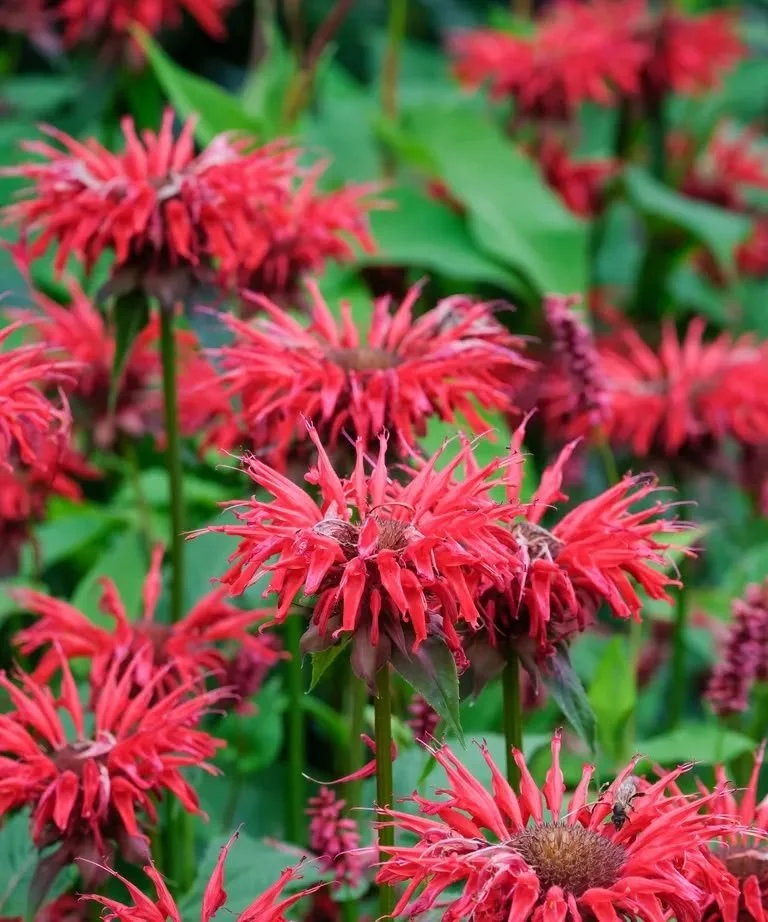
Bee balm is a clump-forming, aromatic perennial growing 60–120 cm tall, with square stems, opposite toothed leaves, and showy mop-head clusters of tubular red, pink, purple, or lavender flowers. It spreads by rhizomes in moist, sunny sites and is highly attractive to pollinators. Historically a beloved herb of Indigenous American peoples and early settlers, including the original "Oswego tea" used as a substitute for imported tea.
Leaves and flowering tops (aerial parts), used fresh or dried. Preparations include herbal teas and infusions, steams, occasional tinctures, fresh leaf poultices, and soothing baths.
Respiratory and fever: Tea of the leaves and flowers was used by Indigenous peoples and settlers as a warming, diaphoretic remedy for colds, flu, congestion, sore throat, and to promote sweating during fever.
Digestive: Taken as a carminative and mild digestive aid for gas, colic, indigestion, and stomach discomfort, similar to other mint-family herbs.
Antiseptic and infections: Used as a wash, gargle, or tea for mouth and throat infections, minor wounds, and skin irritations, thanks to its natural content of thymol-like compounds.
Nervous system: Sometimes used as a gentle stimulant and "nerve" tea to lift mood and support recovery from illness.
Internal: Light, aromatic tea for upper respiratory infections, sinus congestion, sore throat, and mild digestive upset. Often blended with other herbs in cold and flu formulas.
External: Infusions or diluted tinctures as mouthwashes and gargles, and in minor wound care as a gentle antiseptic wash.
General properties: Antiseptic, carminative, diaphoretic, mild antispasmodic, and gently relaxing. Highly valued as a medicinal pollinator plant.
Available as dried leaves and flowering tops, and as a featured ingredient in our cold and flu support tea blend.
Family: Lamiaceae (mint family)
Portuguese: Monarda, bálsamo-de-abelha, bergamota-silvestre, chá de Oswego
Other names: Scarlet bee balm, bergamot, wild bergamot, Oswego tea, horsemint
Bee balm is a clump-forming, aromatic perennial growing 60–120 cm tall, with square stems, opposite toothed leaves, and showy mop-head clusters of tubular red, pink, purple, or lavender flowers. It spreads by rhizomes in moist, sunny sites and is highly attractive to pollinators. Historically a beloved herb of Indigenous American peoples and early settlers, including the original "Oswego tea" used as a substitute for imported tea.
Leaves and flowering tops (aerial parts), used fresh or dried. Preparations include herbal teas and infusions, steams, occasional tinctures, fresh leaf poultices, and soothing baths.
Respiratory and fever: Tea of the leaves and flowers was used by Indigenous peoples and settlers as a warming, diaphoretic remedy for colds, flu, congestion, sore throat, and to promote sweating during fever.
Digestive: Taken as a carminative and mild digestive aid for gas, colic, indigestion, and stomach discomfort, similar to other mint-family herbs.
Antiseptic and infections: Used as a wash, gargle, or tea for mouth and throat infections, minor wounds, and skin irritations, thanks to its natural content of thymol-like compounds.
Nervous system: Sometimes used as a gentle stimulant and "nerve" tea to lift mood and support recovery from illness.
Internal: Light, aromatic tea for upper respiratory infections, sinus congestion, sore throat, and mild digestive upset. Often blended with other herbs in cold and flu formulas.
External: Infusions or diluted tinctures as mouthwashes and gargles, and in minor wound care as a gentle antiseptic wash.
General properties: Antiseptic, carminative, diaphoretic, mild antispasmodic, and gently relaxing. Highly valued as a medicinal pollinator plant.
Available as dried leaves and flowering tops, and as a featured ingredient in our cold and flu support tea blend.