

 Image 1 of 1
California Poppy
Eschscholzia californica
Family: Papaveraceae (poppy family)
Portuguese: Papoila-da-Califórnia, dormideira-da-Califórnia
Other names: Golden poppy, copa de oro, cup of gold
About This Plant
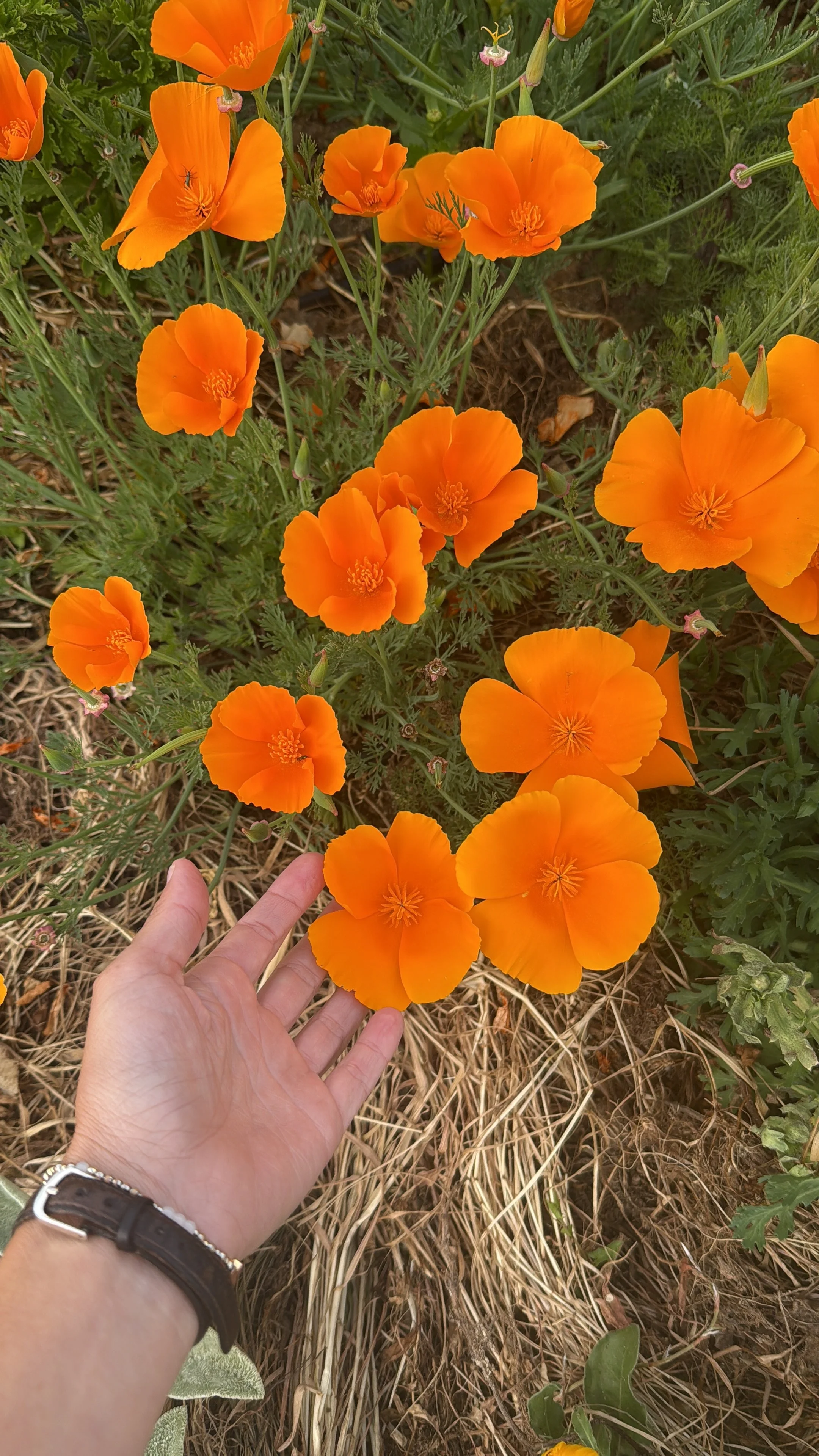
California poppy is a slender, herbaceous annual or short-lived perennial growing 20–60 cm tall, with delicate blue-green finely divided leaves and brilliant silky orange-yellow cup-shaped flowers that close at night and on cloudy days. It thrives in dry, sunny, well-drained soils — well-suited to the Algarve climate. The official state flower of California, it has been valued for centuries by Indigenous Californian peoples for its gentle calming qualities. Unlike its cousin the opium poppy, California poppy is non-narcotic and non-addictive, making it one of the most beloved nervine herbs in modern Western herbalism.
Parts Used Medicinally
Whole aerial parts — leaves, stems, and flowering tops — harvested at full bloom and used fresh or carefully dried. The roots are sometimes used in stronger traditional preparations. Most commonly prepared as:
Fresh or dried herb infusions (teas)
Alcohol tinctures (the most effective form for sleep and anxiety)
Glycerites (alcohol-free, gentle enough for children)
Fluid extracts and capsules
Traditional Uses
Indigenous Californian medicine: Used for centuries by tribes including the Pomo, Costanoan, and Mendocino as a gentle sedative for pain, anxiety, restless sleep, and as a wash for children's irritated skin. Mothers traditionally placed flowers under children's pillows to ease nightmares and promote calm sleep.
Sleep and rest: Used widely as a mild sleep aid for difficulty falling asleep, restless nights, and waking in the night unable to return to sleep.
Nervous system: Valued as a nervine relaxant for anxiety, agitation, nervous tension, and overstimulation — particularly helpful for sensitive or "wired but tired" people.
Pain relief: Used for headaches, toothache, and as a mild analgesic for nervous pain.
Children's herb: One of the few sedating herbs traditionally considered safe and gentle enough for children's restlessness, hyperactivity, and difficulty sleeping (in appropriate doses, especially as glycerite).
Modern Uses
Sleep support: California poppy is one of the most widely used herbs in modern Western herbalism for insomnia, sleep onset difficulties, and frequent night waking. Unlike pharmaceutical sleep aids, it doesn't suppress REM sleep and doesn't leave morning grogginess.
Anxiety and stress: Used for mild to moderate anxiety, nervous tension, restlessness, and the kind of "buzzing mind" that prevents rest. Often combined with valerian, passionflower, or lemon balm in calming formulas.
Children's wellness: Gentle glycerite preparations are used by herbalists and pediatric herbalism practitioners for childhood anxiety, restlessness, difficulty sleeping, and nightmares.
Pain support: Mild analgesic and antispasmodic properties make it useful for tension headaches, menstrual cramps, and nervous pain. The plant contains protopine and related alkaloids that interact gently with GABA receptors — calming without being narcotic.
Research insights: Studies have explored its anxiolytic, sedative, and analgesic properties, supporting traditional use. Notably, California poppy is not addictive and has been used safely in long-term sleep and anxiety protocols.
Safety Notes
Generally very safe and well-tolerated, even in sensitive individuals. Avoid during pregnancy and breastfeeding (limited safety data). May enhance the effects of sedative medications, sleep aids, alcohol, or anti-anxiety drugs — consult a healthcare provider if combining. Not addictive, but as with any sleep herb, best used as part of a broader sleep and nervous system care practice rather than long-term solo reliance.
Available in Our Apothecary
Eschscholzia californica
Family: Papaveraceae (poppy family)
Portuguese: Papoila-da-Califórnia, dormideira-da-Califórnia
Other names: Golden poppy, copa de oro, cup of gold
About This Plant
California poppy is a slender, herbaceous annual or short-lived perennial growing 20–60 cm tall, with delicate blue-green finely divided leaves and brilliant silky orange-yellow cup-shaped flowers that close at night and on cloudy days. It thrives in dry, sunny, well-drained soils — well-suited to the Algarve climate. The official state flower of California, it has been valued for centuries by Indigenous Californian peoples for its gentle calming qualities. Unlike its cousin the opium poppy, California poppy is non-narcotic and non-addictive, making it one of the most beloved nervine herbs in modern Western herbalism.
Parts Used Medicinally
Whole aerial parts — leaves, stems, and flowering tops — harvested at full bloom and used fresh or carefully dried. The roots are sometimes used in stronger traditional preparations. Most commonly prepared as:
Fresh or dried herb infusions (teas)
Alcohol tinctures (the most effective form for sleep and anxiety)
Glycerites (alcohol-free, gentle enough for children)
Fluid extracts and capsules
Traditional Uses
Indigenous Californian medicine: Used for centuries by tribes including the Pomo, Costanoan, and Mendocino as a gentle sedative for pain, anxiety, restless sleep, and as a wash for children's irritated skin. Mothers traditionally placed flowers under children's pillows to ease nightmares and promote calm sleep.
Sleep and rest: Used widely as a mild sleep aid for difficulty falling asleep, restless nights, and waking in the night unable to return to sleep.
Nervous system: Valued as a nervine relaxant for anxiety, agitation, nervous tension, and overstimulation — particularly helpful for sensitive or "wired but tired" people.
Pain relief: Used for headaches, toothache, and as a mild analgesic for nervous pain.
Children's herb: One of the few sedating herbs traditionally considered safe and gentle enough for children's restlessness, hyperactivity, and difficulty sleeping (in appropriate doses, especially as glycerite).
Modern Uses
Sleep support: California poppy is one of the most widely used herbs in modern Western herbalism for insomnia, sleep onset difficulties, and frequent night waking. Unlike pharmaceutical sleep aids, it doesn't suppress REM sleep and doesn't leave morning grogginess.
Anxiety and stress: Used for mild to moderate anxiety, nervous tension, restlessness, and the kind of "buzzing mind" that prevents rest. Often combined with valerian, passionflower, or lemon balm in calming formulas.
Children's wellness: Gentle glycerite preparations are used by herbalists and pediatric herbalism practitioners for childhood anxiety, restlessness, difficulty sleeping, and nightmares.
Pain support: Mild analgesic and antispasmodic properties make it useful for tension headaches, menstrual cramps, and nervous pain. The plant contains protopine and related alkaloids that interact gently with GABA receptors — calming without being narcotic.
Research insights: Studies have explored its anxiolytic, sedative, and analgesic properties, supporting traditional use. Notably, California poppy is not addictive and has been used safely in long-term sleep and anxiety protocols.
Safety Notes
Generally very safe and well-tolerated, even in sensitive individuals. Avoid during pregnancy and breastfeeding (limited safety data). May enhance the effects of sedative medications, sleep aids, alcohol, or anti-anxiety drugs — consult a healthcare provider if combining. Not addictive, but as with any sleep herb, best used as part of a broader sleep and nervous system care practice rather than long-term solo reliance.