

 Image 1 of 1
Family: Asteraceae (daisy family)
Portuguese: Fidalguinhos, escovinha, lóios, centáurea-azul
Other names: Bachelor's button, bluebottle, hurtsickle, blue cap
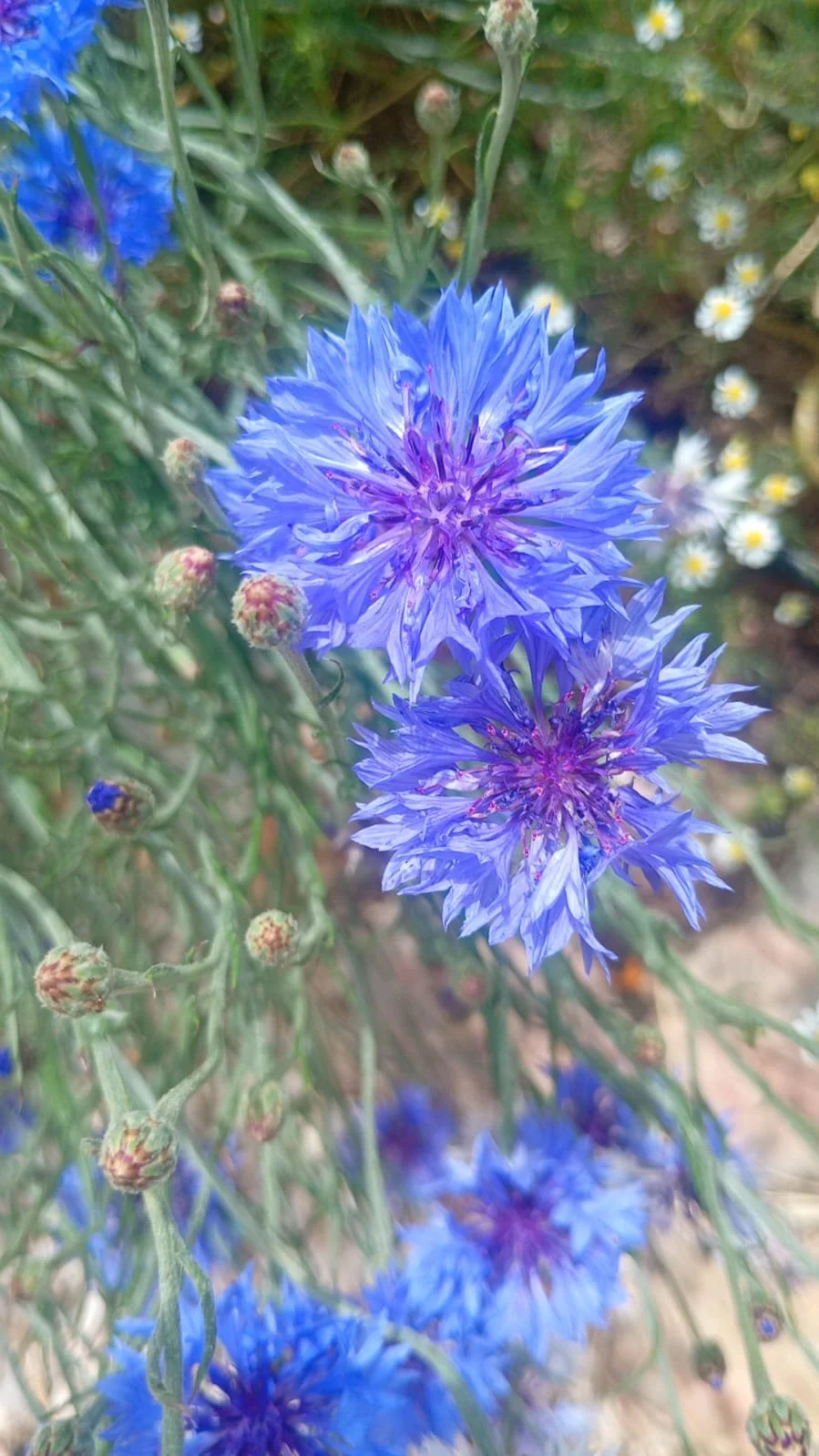
Cornflower is a slender annual herb, 30–90 cm tall, with grey-green narrow leaves and brilliant deep-blue (occasionally pink or white) star-shaped flowers that bloom in summer. Once a common wildflower of European cornfields — its name comes from growing alongside grain crops — it is now rare in the wild due to modern agriculture but widely cultivated for ornament, herbalism, and culinary use. The flowers are one of the most striking blues in the plant kingdom.
Mainly the petals (florets) and sometimes whole flower heads, harvested in full bloom and carefully dried in shade to preserve the deep blue colour. Used as:
Herbal tea infusions
Eyewashes and compresses (traditional)
Decorative + functional ingredient in tea blends
Hydrosol (flower water) for skin care
Eye care: Cornflower has been used for centuries in European folk medicine as a soothing eyewash for tired, irritated, inflamed eyes and mild conjunctivitis — earning it the old name "casse-lunettes" (breaks-glasses) in French.
Digestive: Used as a mild bitter tonic for poor appetite, sluggish digestion, and gastric discomfort.
Skin: External compresses for irritated skin, minor wounds, and as a gentle wash for sensitive complexions.
Mouth and throat: Gargles for mouth ulcers and gum inflammation.
Eye compresses and rinses: Still widely used in natural cosmetics and herbal eye care products — tea bags applied cool to tired eyes, eye creams, and hydrosols for sensitive eye areas.
Skin care: The flower extract is featured in toners, hydrosols, and creams for sensitive, reactive, and mature skin — valued for its anti-inflammatory and astringent qualities.
Culinary: The petals are edible — beautiful in salads, herbal teas, sprinkled on cakes, or used as a natural blue garnish.
Tea blends: Adds visual beauty and mild flavour to relaxing and digestive tea blends.
Generally very safe and well-tolerated. May cause allergic reactions in those sensitive to the Asteraceae family (ragweed, daisies, etc.). For internal use during pregnancy, consult a herbalist.
Family: Asteraceae (daisy family)
Portuguese: Fidalguinhos, escovinha, lóios, centáurea-azul
Other names: Bachelor's button, bluebottle, hurtsickle, blue cap
Cornflower is a slender annual herb, 30–90 cm tall, with grey-green narrow leaves and brilliant deep-blue (occasionally pink or white) star-shaped flowers that bloom in summer. Once a common wildflower of European cornfields — its name comes from growing alongside grain crops — it is now rare in the wild due to modern agriculture but widely cultivated for ornament, herbalism, and culinary use. The flowers are one of the most striking blues in the plant kingdom.
Mainly the petals (florets) and sometimes whole flower heads, harvested in full bloom and carefully dried in shade to preserve the deep blue colour. Used as:
Herbal tea infusions
Eyewashes and compresses (traditional)
Decorative + functional ingredient in tea blends
Hydrosol (flower water) for skin care
Eye care: Cornflower has been used for centuries in European folk medicine as a soothing eyewash for tired, irritated, inflamed eyes and mild conjunctivitis — earning it the old name "casse-lunettes" (breaks-glasses) in French.
Digestive: Used as a mild bitter tonic for poor appetite, sluggish digestion, and gastric discomfort.
Skin: External compresses for irritated skin, minor wounds, and as a gentle wash for sensitive complexions.
Mouth and throat: Gargles for mouth ulcers and gum inflammation.
Eye compresses and rinses: Still widely used in natural cosmetics and herbal eye care products — tea bags applied cool to tired eyes, eye creams, and hydrosols for sensitive eye areas.
Skin care: The flower extract is featured in toners, hydrosols, and creams for sensitive, reactive, and mature skin — valued for its anti-inflammatory and astringent qualities.
Culinary: The petals are edible — beautiful in salads, herbal teas, sprinkled on cakes, or used as a natural blue garnish.
Tea blends: Adds visual beauty and mild flavour to relaxing and digestive tea blends.
Generally very safe and well-tolerated. May cause allergic reactions in those sensitive to the Asteraceae family (ragweed, daisies, etc.). For internal use during pregnancy, consult a herbalist.