

 Image 1 of 1
Family: Lamiaceae
Portuguese: Dictamo de Creta, orégão de Creta
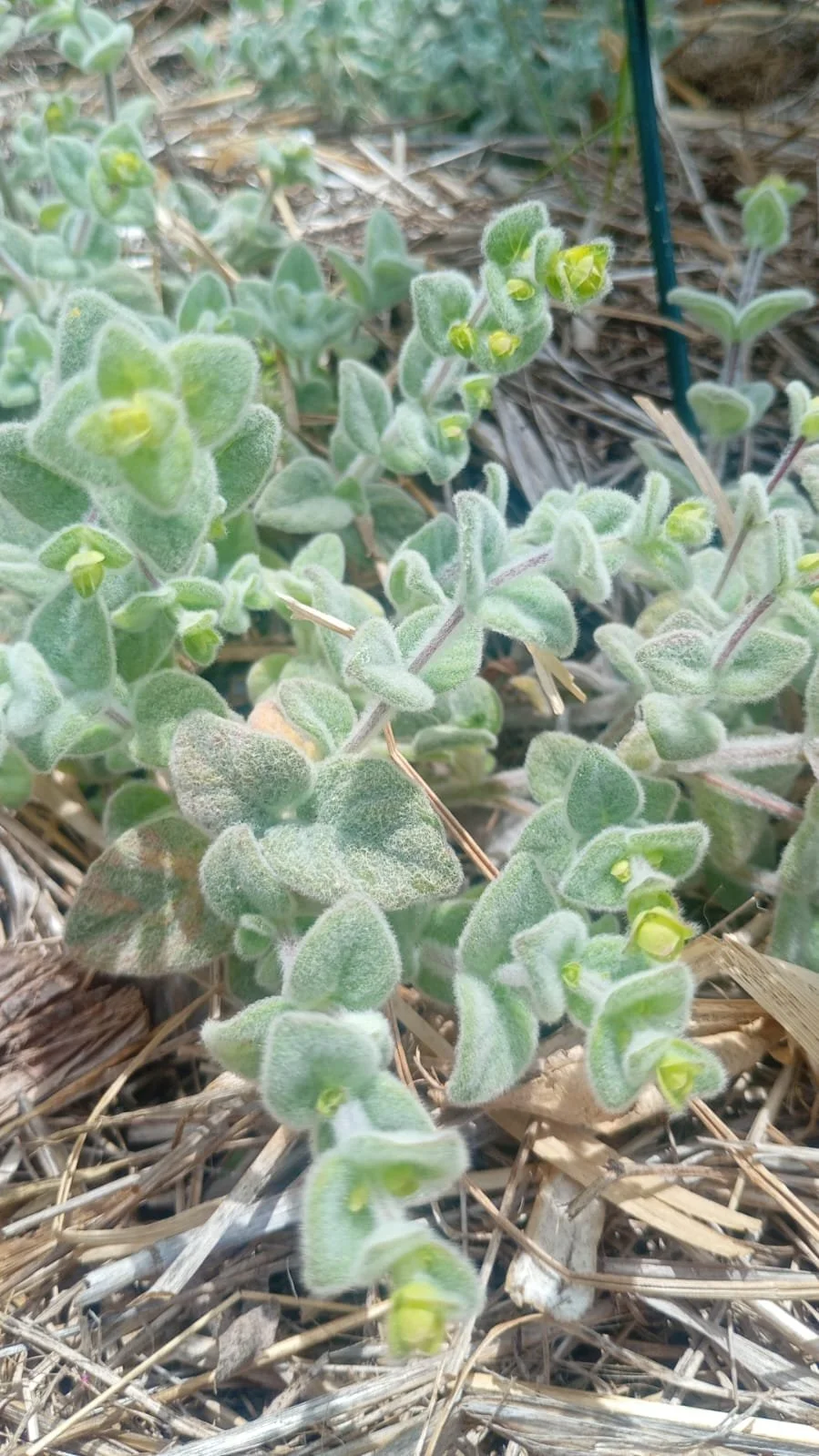
Dittany of Crete is a small aromatic perennial sub-shrub from the mint family, 20-30 cm tall, with woolly grey-green leaves and nodding pink-purple flower spikes. It is endemic to the rocky slopes of Crete — meaning it grows naturally only on this Greek island. It has been considered a sacred medicinal plant since antiquity.
Wild dittany is now protected. Most apothecary supplies come from cultivated plants, including those grown in carefully tended gardens like ours.
Aerial parts — leaves and flowering tops, harvested during flowering and dried in shade to preserve the volatile oils.
In Cretan and broader Mediterranean folk medicine, dittany has been valued since classical antiquity:
Digestive: Stomach ache, gastric ulcers, nausea, colic; taken as a stomachic and carminative tea after meals.
Respiratory: Sore throat, cough, mouth and throat inflammation (chewed leaves or warm infusion).
Gynecological: Menstrual pains, emmenagogue use, and traditional midwifery support during childbirth.
Wounds: External applications for cuts, ulcers, and bleeding.
Folk uses: Treatment for intestinal worms, cramps, hypertension, and historically as a snake-bite remedy.
Digestive tea: Widely consumed across Greece for mild digestive discomfort, bloating, and as a relaxing evening infusion.
Antimicrobial: Essential oil rich in carvacrol and thymol shows antibacterial and antioxidant activity in research.
Topical: Used in natural cosmetics for its astringent and antimicrobial qualities.
Culinary: Aromatic leaves used like mild oregano in salads, herbal blends, and traditional liqueurs (notably vermouth).
Dried leaves (cultivated, ethically sourced)
Featured in our Mediterranean Digestive Tea
Featured in our Women's Wisdom Blend
Available for herbal consultations
Family: Lamiaceae
Portuguese: Dictamo de Creta, orégão de Creta
Dittany of Crete is a small aromatic perennial sub-shrub from the mint family, 20-30 cm tall, with woolly grey-green leaves and nodding pink-purple flower spikes. It is endemic to the rocky slopes of Crete — meaning it grows naturally only on this Greek island. It has been considered a sacred medicinal plant since antiquity.
Wild dittany is now protected. Most apothecary supplies come from cultivated plants, including those grown in carefully tended gardens like ours.
Aerial parts — leaves and flowering tops, harvested during flowering and dried in shade to preserve the volatile oils.
In Cretan and broader Mediterranean folk medicine, dittany has been valued since classical antiquity:
Digestive: Stomach ache, gastric ulcers, nausea, colic; taken as a stomachic and carminative tea after meals.
Respiratory: Sore throat, cough, mouth and throat inflammation (chewed leaves or warm infusion).
Gynecological: Menstrual pains, emmenagogue use, and traditional midwifery support during childbirth.
Wounds: External applications for cuts, ulcers, and bleeding.
Folk uses: Treatment for intestinal worms, cramps, hypertension, and historically as a snake-bite remedy.
Digestive tea: Widely consumed across Greece for mild digestive discomfort, bloating, and as a relaxing evening infusion.
Antimicrobial: Essential oil rich in carvacrol and thymol shows antibacterial and antioxidant activity in research.
Topical: Used in natural cosmetics for its astringent and antimicrobial qualities.
Culinary: Aromatic leaves used like mild oregano in salads, herbal blends, and traditional liqueurs (notably vermouth).
Dried leaves (cultivated, ethically sourced)
Featured in our Mediterranean Digestive Tea
Featured in our Women's Wisdom Blend
Available for herbal consultations