

 Image 1 of 1
Family: Asteraceae (daisy family)
Portuguese: Equinácea, equinácea-de-folha-estreita, flor-de-equinácea
Other names: Coneflower, purple coneflower, narrow-leaf coneflower
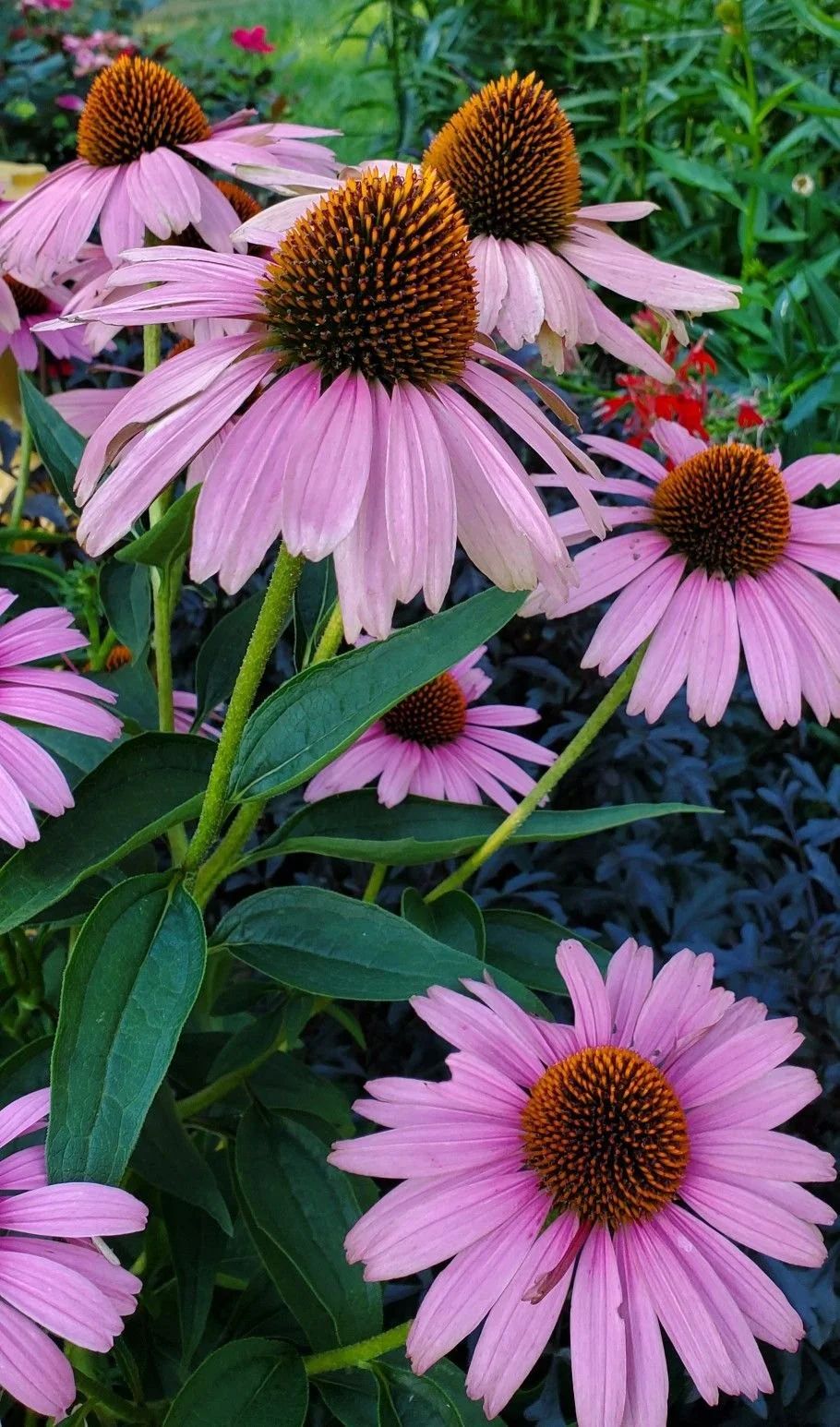
Echinacea is a hardy herbaceous perennial, 30–60 cm tall, with a deep taproot, rough hairy leaves, and striking single pink-purple daisy-like flower heads featuring a prominent spiny cone at the center. Native to North America, it has become one of the most widely used immune-supporting herbs in modern herbalism.
Roots: Fresh or dried roots — especially of E. angustifolia and E. pallida — sliced and dried for tinctures, decoctions, and fluid extracts.
Aerial parts and flowers: Fresh or dried flowering tops (mainly E. purpurea) used for tinctures, juices, and teas.
Immune support: Used by North American Indigenous peoples and later European herbalists for infections, snake and insect bites, sore throat, and "blood poisoning" as a general aid to the body's defenses.
Respiratory infections: Teas and tinctures taken at first signs of colds, flu, sore throat, tonsillitis, and bronchial infections to shorten duration and reduce severity.
Skin and wound care: Poultices and washes for infected wounds, abscesses, boils, ulcers, burns, and insect or spider bites.
Oral and dental: Mouthwashes for gingivitis, mouth ulcers, and minor oral infections.
Acute immune support: Standardized extracts used at the onset of upper respiratory tract infections to help reduce symptom severity and duration in some clinical studies.
Recurrent infections: Used in courses to reduce frequency of recurrent colds, sinusitis, or urinary tract infections, often combined with other herbs.
Local antiseptic: Included in sprays, lozenges, and gargles for sore throat and inflamed mucous membranes.
Skin applications: Used in creams or gels for minor infected wounds, slow-healing ulcers, and inflammatory skin problems, usually as part of a formula.
Available as dried root, dried flowering tops, tincture, and as a featured ingredient in our immune support blend.
Family: Asteraceae (daisy family)
Portuguese: Equinácea, equinácea-de-folha-estreita, flor-de-equinácea
Other names: Coneflower, purple coneflower, narrow-leaf coneflower
Echinacea is a hardy herbaceous perennial, 30–60 cm tall, with a deep taproot, rough hairy leaves, and striking single pink-purple daisy-like flower heads featuring a prominent spiny cone at the center. Native to North America, it has become one of the most widely used immune-supporting herbs in modern herbalism.
Roots: Fresh or dried roots — especially of E. angustifolia and E. pallida — sliced and dried for tinctures, decoctions, and fluid extracts.
Aerial parts and flowers: Fresh or dried flowering tops (mainly E. purpurea) used for tinctures, juices, and teas.
Immune support: Used by North American Indigenous peoples and later European herbalists for infections, snake and insect bites, sore throat, and "blood poisoning" as a general aid to the body's defenses.
Respiratory infections: Teas and tinctures taken at first signs of colds, flu, sore throat, tonsillitis, and bronchial infections to shorten duration and reduce severity.
Skin and wound care: Poultices and washes for infected wounds, abscesses, boils, ulcers, burns, and insect or spider bites.
Oral and dental: Mouthwashes for gingivitis, mouth ulcers, and minor oral infections.
Acute immune support: Standardized extracts used at the onset of upper respiratory tract infections to help reduce symptom severity and duration in some clinical studies.
Recurrent infections: Used in courses to reduce frequency of recurrent colds, sinusitis, or urinary tract infections, often combined with other herbs.
Local antiseptic: Included in sprays, lozenges, and gargles for sore throat and inflamed mucous membranes.
Skin applications: Used in creams or gels for minor infected wounds, slow-healing ulcers, and inflammatory skin problems, usually as part of a formula.
Available as dried root, dried flowering tops, tincture, and as a featured ingredient in our immune support blend.