

 Image 1 of 1
Family: Asteraceae
Portuguese: Tanaceto, partenela, rainha-das-ervas
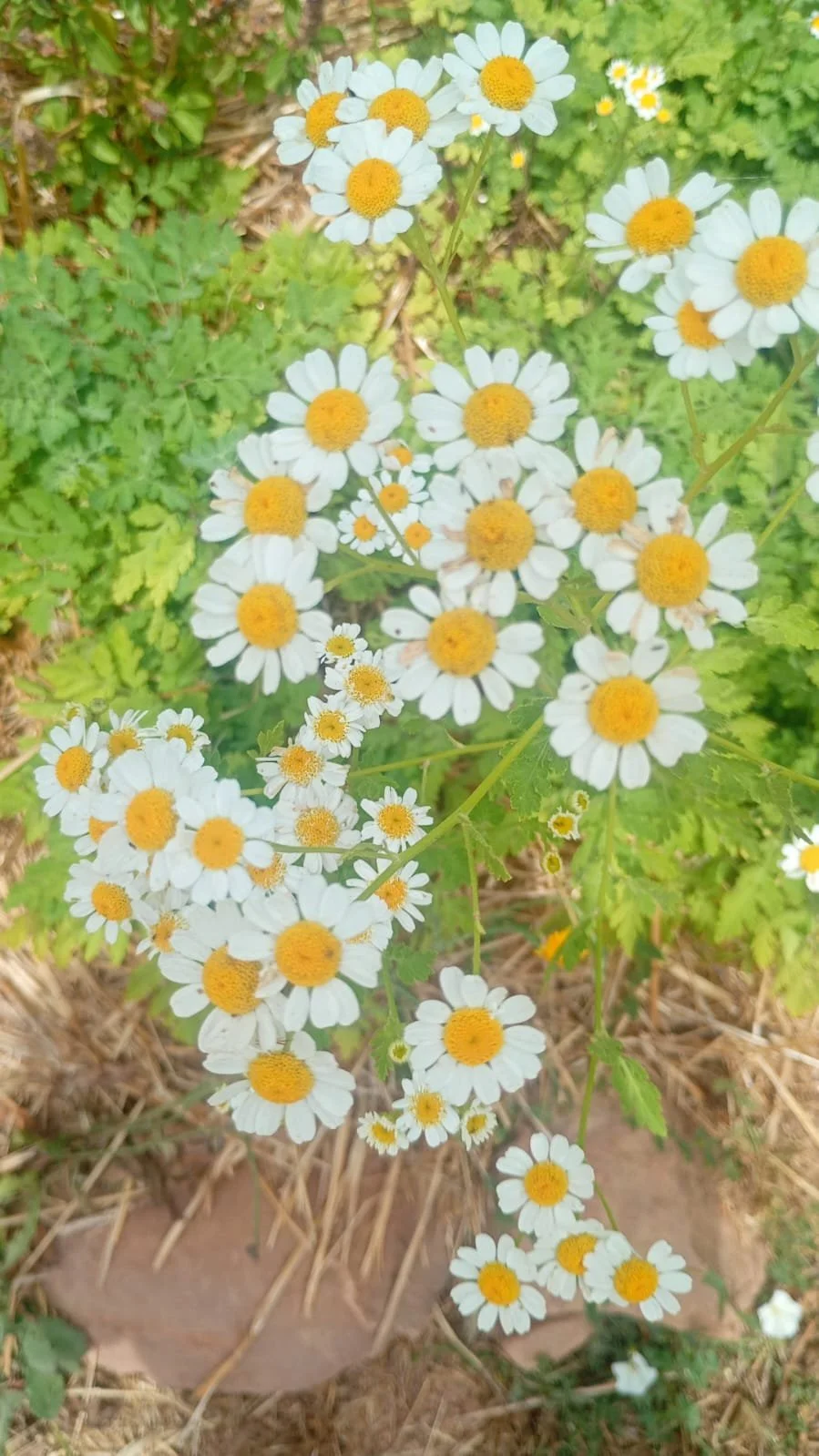
About: A small, aromatic, bushy perennial 10-60 cm high, with daisy-like flowerheads and strongly scented, lobed leaves. Historically known as "medieval aspirin" for its use in headaches, fevers, and pain.
Parts used: Flowering aerial parts — leaves and flowerheads, harvested at full bloom when parthenolide content is highest.
Traditional uses:
Fevers, headaches, migraines, and general pain
Rheumatoid arthritis, osteoarthritis, and joint pain
Stomach ache, indigestion, bloating, and intestinal worms
Menstrual cramps (with caution — emmenagogue properties)
Topical: toothache, insect bites, eczema, and psoriasis
Modern uses:
Migraine prevention: Standardized extracts taken daily over weeks can reduce attack frequency and severity in some individuals — one of the best-studied uses
Anti-inflammatory: Used for arthritis and musculoskeletal pain
Inhibits prostaglandins, leukotrienes, and thromboxanes
Research areas include anxiolytic, antimicrobial, and antitumor effects
Cautions: Not for use during pregnancy. May cause mouth ulcers when fresh leaves are chewed daily. Allergic reactions possible in those sensitive to Asteraceae.
Dried herb (loose)
Feverfew tincture
Featured in our Headache Relief Blend
Family: Asteraceae
Portuguese: Tanaceto, partenela, rainha-das-ervas
About: A small, aromatic, bushy perennial 10-60 cm high, with daisy-like flowerheads and strongly scented, lobed leaves. Historically known as "medieval aspirin" for its use in headaches, fevers, and pain.
Parts used: Flowering aerial parts — leaves and flowerheads, harvested at full bloom when parthenolide content is highest.
Traditional uses:
Fevers, headaches, migraines, and general pain
Rheumatoid arthritis, osteoarthritis, and joint pain
Stomach ache, indigestion, bloating, and intestinal worms
Menstrual cramps (with caution — emmenagogue properties)
Topical: toothache, insect bites, eczema, and psoriasis
Modern uses:
Migraine prevention: Standardized extracts taken daily over weeks can reduce attack frequency and severity in some individuals — one of the best-studied uses
Anti-inflammatory: Used for arthritis and musculoskeletal pain
Inhibits prostaglandins, leukotrienes, and thromboxanes
Research areas include anxiolytic, antimicrobial, and antitumor effects
Cautions: Not for use during pregnancy. May cause mouth ulcers when fresh leaves are chewed daily. Allergic reactions possible in those sensitive to Asteraceae.
Dried herb (loose)
Feverfew tincture
Featured in our Headache Relief Blend