

 Image 1 of 1
Family: Malvaceae
Portuguese: Alteia, malvaísco
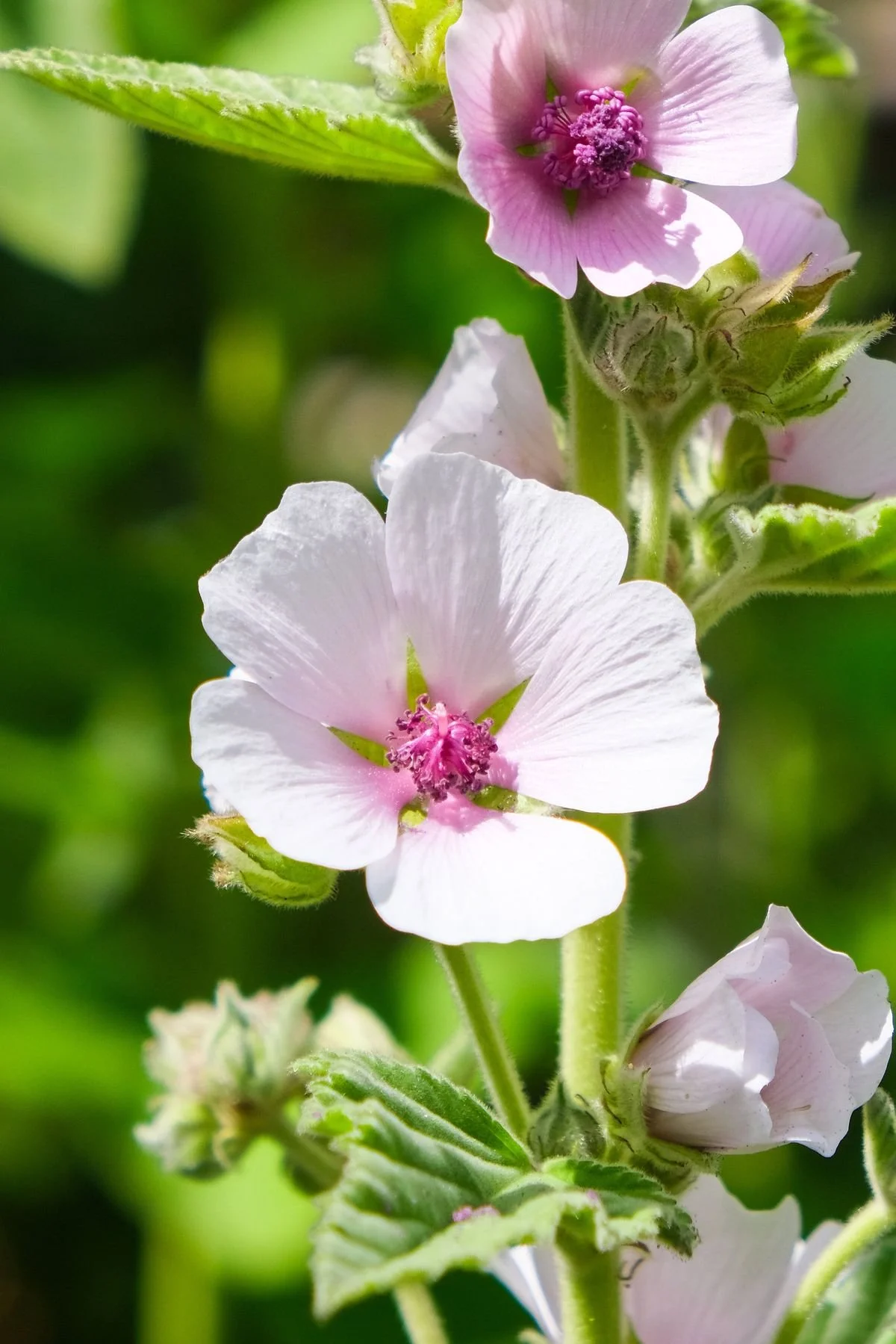
Marsh Mallow is a perennial herbaceous plant growing 1-1.5 m tall in moist or marshy habitats, with soft velvety leaves and pale pink to white mallow-like flowers. It has been used medicinally for over 2,000 years across Egyptian, Greek, Roman, and Arabian traditions.
The name comes from the Greek altho (to heal). The plant's high mucilage content is what gives it its characteristic soothing quality.
Root: The most used part, dried and rich in mucilage.
Leaves and flowers: Milder mucilaginous and soothing properties.
Respiratory: Used for dry coughs, bronchial irritation, sore throat, and asthma-like symptoms as a soothing demulcent.
Digestive: Used for gastritis, ulcers, colitis, dysentery, and general digestive irritation. The root forms a protective coating over inflamed mucous membranes.
Urinary: Applied to painful urination, kidney stones, and urinary tract irritation.
Topical: Made into poultices and pastes for bruises, wounds, burns, abscesses, and inflamed skin.
Throat and respiratory: Officially approved in many European pharmacopoeias for sore throat, dry cough, and irritated mucosa. Used as cold-infused tea, syrup, or lozenges.
Digestive tract: Recommended for gastritis, peptic ulcers, IBS, and Crohn's-like irritation.
Urinary tract: Used for mild cystitis as a soothing diuretic tea.
Topical and cosmetic: Featured in creams and ointments for dry, irritated skin.
Marsh Mallow is one of the safest medicinal herbs and is generally well-tolerated by all ages, including children.
Dried root (loose)
Dried leaves and flowers
Featured in our Throat Soothe Tea Blend
Featured in our Digestive Calm Tea Blend
Marsh mallow root infusion (cold-prepared)
Family: Malvaceae
Portuguese: Alteia, malvaísco
Marsh Mallow is a perennial herbaceous plant growing 1-1.5 m tall in moist or marshy habitats, with soft velvety leaves and pale pink to white mallow-like flowers. It has been used medicinally for over 2,000 years across Egyptian, Greek, Roman, and Arabian traditions.
The name comes from the Greek altho (to heal). The plant's high mucilage content is what gives it its characteristic soothing quality.
Root: The most used part, dried and rich in mucilage.
Leaves and flowers: Milder mucilaginous and soothing properties.
Respiratory: Used for dry coughs, bronchial irritation, sore throat, and asthma-like symptoms as a soothing demulcent.
Digestive: Used for gastritis, ulcers, colitis, dysentery, and general digestive irritation. The root forms a protective coating over inflamed mucous membranes.
Urinary: Applied to painful urination, kidney stones, and urinary tract irritation.
Topical: Made into poultices and pastes for bruises, wounds, burns, abscesses, and inflamed skin.
Throat and respiratory: Officially approved in many European pharmacopoeias for sore throat, dry cough, and irritated mucosa. Used as cold-infused tea, syrup, or lozenges.
Digestive tract: Recommended for gastritis, peptic ulcers, IBS, and Crohn's-like irritation.
Urinary tract: Used for mild cystitis as a soothing diuretic tea.
Topical and cosmetic: Featured in creams and ointments for dry, irritated skin.
Marsh Mallow is one of the safest medicinal herbs and is generally well-tolerated by all ages, including children.
Dried root (loose)
Dried leaves and flowers
Featured in our Throat Soothe Tea Blend
Featured in our Digestive Calm Tea Blend
Marsh mallow root infusion (cold-prepared)