

 Image 1 of 1
Family: Asteraceae
Portuguese: Artemisa, altamira, hierba de São João
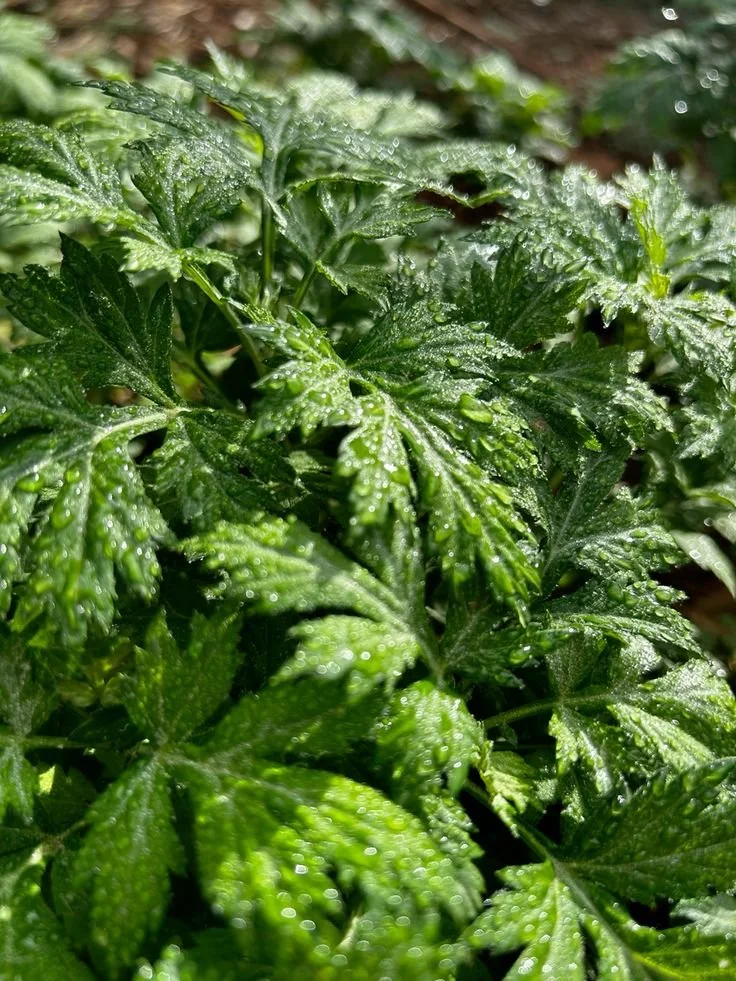
Mugwort is an aromatic herbaceous perennial growing up to 1.5 m tall. It spreads via rhizomes and is widespread across Europe, Asia, and North America. In medieval European herbalism it was called the "mother of herbs", and it holds significant roles in traditions across multiple cultures.
Leaves and stems, primarily dried for teas, tinctures, smoking blends, or moxibustion sticks. Fresh leaves can be used in poultices.
European folk medicine: Used for digestive complaints (colic, gas, diarrhea, constipation), headaches, fever, insomnia, and nervous conditions. Also valued as an anthelmintic (for parasites) and emmenagogue (for menstrual regulation).
Traditional Chinese Medicine and Ayurveda: Used for gynecological disorders, gastrointestinal discomfort, and in moxibustion — the practice of burning compressed mugwort near acupuncture points to warm the body. Documented use includes turning breech babies before birth.
Medieval European herbalism: Considered the "mother of herbs" and applied to wounds, gout, rheumatic pains, and epilepsy.
Sleep and dreams: Often used in evening teas to support restful sleep and vivid dreaming.
Menstrual support: Helps with cramps and irregular cycles.
Moxibustion: Research supports its use for breech presentation correction and knee osteoarthritis pain.
Topical applications: Used in lotions for hypertrophic scars.
Digestive support: Bitter properties stimulate digestion.
Not recommended during pregnancy due to its emmenagogue properties.
Dried leaves (loose herb)
Featured in our Sleep & Dream Tea Blend
Featured in our Women's Cycle Support Blend
Mugwort tincture
Smudge bundles for clearing space
Family: Asteraceae
Portuguese: Artemisa, altamira, hierba de São João
Mugwort is an aromatic herbaceous perennial growing up to 1.5 m tall. It spreads via rhizomes and is widespread across Europe, Asia, and North America. In medieval European herbalism it was called the "mother of herbs", and it holds significant roles in traditions across multiple cultures.
Leaves and stems, primarily dried for teas, tinctures, smoking blends, or moxibustion sticks. Fresh leaves can be used in poultices.
European folk medicine: Used for digestive complaints (colic, gas, diarrhea, constipation), headaches, fever, insomnia, and nervous conditions. Also valued as an anthelmintic (for parasites) and emmenagogue (for menstrual regulation).
Traditional Chinese Medicine and Ayurveda: Used for gynecological disorders, gastrointestinal discomfort, and in moxibustion — the practice of burning compressed mugwort near acupuncture points to warm the body. Documented use includes turning breech babies before birth.
Medieval European herbalism: Considered the "mother of herbs" and applied to wounds, gout, rheumatic pains, and epilepsy.
Sleep and dreams: Often used in evening teas to support restful sleep and vivid dreaming.
Menstrual support: Helps with cramps and irregular cycles.
Moxibustion: Research supports its use for breech presentation correction and knee osteoarthritis pain.
Topical applications: Used in lotions for hypertrophic scars.
Digestive support: Bitter properties stimulate digestion.
Not recommended during pregnancy due to its emmenagogue properties.
Dried leaves (loose herb)
Featured in our Sleep & Dream Tea Blend
Featured in our Women's Cycle Support Blend
Mugwort tincture
Smudge bundles for clearing space