

 Image 1 of 1
Family: Lamiaceae (mint family)
Portuguese: Orégão, orégano, ourégão
Other names: Wild marjoram, common oregano
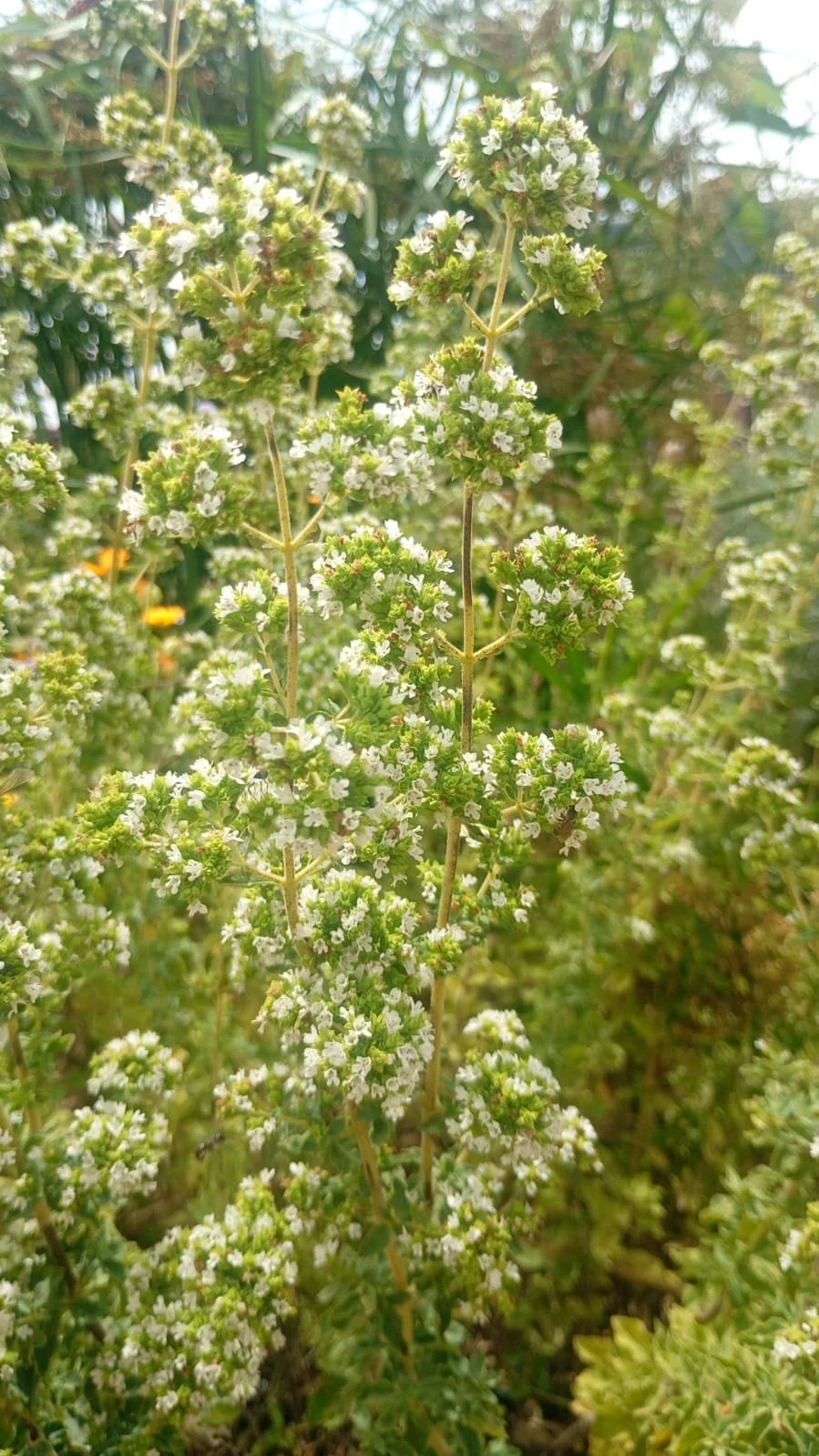
Oregano is an aromatic, hardy perennial herb growing 30–80 cm tall, with woody-based stems, opposite oval leaves, and clusters of small pink-purple flowers. Native to the Mediterranean and western Asia, it thrives in dry, sunny, rocky soils — perfectly adapted to the Algarve. The name comes from the Greek oros (mountain) + ganos (joy) — "joy of the mountain." Beloved as both kitchen and medicine herb across Greek, Italian, Spanish, and Portuguese traditions.
Aerial parts — leaves and flowering tops, used fresh or dried. Most commonly prepared as:
Tea infusions
Essential oil (highly concentrated — use with care)
Steam inhalations
Culinary herb (dried)
Tinctures
Respiratory: Used across Mediterranean folk medicine for coughs, colds, bronchitis, sore throats, and asthma. Steam inhalations with oregano were a household remedy for congestion.
Digestive: Carminative and bitter tonic for poor digestion, bloating, gas, intestinal cramps, and parasites. A small glass of oregano tea after heavy meals is a Portuguese tradition.
Menstrual: Used as an emmenagogue to promote menstrual flow and ease cramps.
Antimicrobial: Used as a wash, gargle, or topical preparation for wounds, mouth ulcers, throat infections, and skin issues.
Culinary medicine: Used liberally in cooking — particularly with tomatoes, beans, and grains — as a daily preventative tonic against infections and digestive complaints.
Antimicrobial and antifungal: Oregano essential oil contains high levels of carvacrol and thymol — well-documented for broad-spectrum antimicrobial activity. Used in modern integrative medicine for gut dysbiosis, candida overgrowth, and minor respiratory infections.
Respiratory support: Steam inhalations, syrups, and lozenges for coughs, congestion, and sore throats.
Digestive health: Used in tinctures and capsules for SIBO (small intestinal bacterial overgrowth) protocols, IBS, and digestive infections.
Anti-inflammatory and antioxidant: Strong antioxidant activity supports cellular health.
Culinary: Fresh or dried, oregano is one of the most loved Mediterranean herbs — pizzas, tomato sauces, grilled vegetables, Portuguese fish dishes (orégãos sobre o peixe).
Safe in culinary amounts. Medicinal doses should be avoided during pregnancy. Essential oil is very potent — always dilute well, use short courses only, never undiluted on skin or internally without professional guidance. May interact with blood-thinning medications and blood sugar medications.
Available as dried herb, oregano essential oil, tincture, and as a featured ingredient in our digestive and immune support blends.
Family: Lamiaceae (mint family)
Portuguese: Orégão, orégano, ourégão
Other names: Wild marjoram, common oregano
Oregano is an aromatic, hardy perennial herb growing 30–80 cm tall, with woody-based stems, opposite oval leaves, and clusters of small pink-purple flowers. Native to the Mediterranean and western Asia, it thrives in dry, sunny, rocky soils — perfectly adapted to the Algarve. The name comes from the Greek oros (mountain) + ganos (joy) — "joy of the mountain." Beloved as both kitchen and medicine herb across Greek, Italian, Spanish, and Portuguese traditions.
Aerial parts — leaves and flowering tops, used fresh or dried. Most commonly prepared as:
Tea infusions
Essential oil (highly concentrated — use with care)
Steam inhalations
Culinary herb (dried)
Tinctures
Respiratory: Used across Mediterranean folk medicine for coughs, colds, bronchitis, sore throats, and asthma. Steam inhalations with oregano were a household remedy for congestion.
Digestive: Carminative and bitter tonic for poor digestion, bloating, gas, intestinal cramps, and parasites. A small glass of oregano tea after heavy meals is a Portuguese tradition.
Menstrual: Used as an emmenagogue to promote menstrual flow and ease cramps.
Antimicrobial: Used as a wash, gargle, or topical preparation for wounds, mouth ulcers, throat infections, and skin issues.
Culinary medicine: Used liberally in cooking — particularly with tomatoes, beans, and grains — as a daily preventative tonic against infections and digestive complaints.
Antimicrobial and antifungal: Oregano essential oil contains high levels of carvacrol and thymol — well-documented for broad-spectrum antimicrobial activity. Used in modern integrative medicine for gut dysbiosis, candida overgrowth, and minor respiratory infections.
Respiratory support: Steam inhalations, syrups, and lozenges for coughs, congestion, and sore throats.
Digestive health: Used in tinctures and capsules for SIBO (small intestinal bacterial overgrowth) protocols, IBS, and digestive infections.
Anti-inflammatory and antioxidant: Strong antioxidant activity supports cellular health.
Culinary: Fresh or dried, oregano is one of the most loved Mediterranean herbs — pizzas, tomato sauces, grilled vegetables, Portuguese fish dishes (orégãos sobre o peixe).
Safe in culinary amounts. Medicinal doses should be avoided during pregnancy. Essential oil is very potent — always dilute well, use short courses only, never undiluted on skin or internally without professional guidance. May interact with blood-thinning medications and blood sugar medications.
Available as dried herb, oregano essential oil, tincture, and as a featured ingredient in our digestive and immune support blends.