

 Image 1 of 1
Family: Asteraceae
Portuguese: Artemísia-doce, losna-doce, artemísia-anual
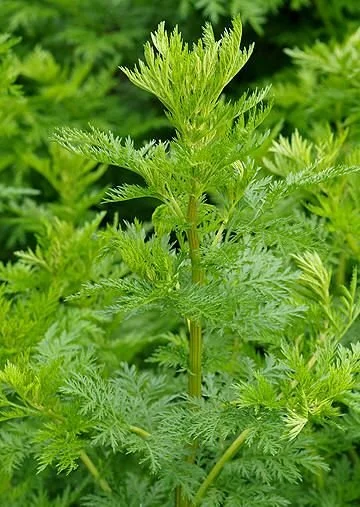
About: A fragrant herbaceous annual growing 0.3-2 m tall, with erect hairless stems and finely divided fern-like leaves. Yellow flower heads appear in late summer to autumn. This plant gained global recognition when researcher Tu Youyou won the 2015 Nobel Prize in Medicine for discovering artemisinin from this plant — now the foundation of malaria treatment worldwide.
Parts used: Aerial parts — leaves and young flowering tops. The whole flowering herb is used in some traditions.
Traditional uses:
Traditional Chinese Medicine: Treatment of intermittent fevers and malaria, including chloroquine-resistant forms; also used for skin diseases, jaundice, dysentery, and various inflammatory conditions
Folk medicine across Asia and Africa: Whole-plant decoctions for malaria, fever, coughs, colds, and diarrhea
Considered anthelmintic, antipyretic, antiseptic, antispasmodic, carminative, and tonic
Modern uses:
Antimalarial: Source plant for artemisinin, the basis of artemisinin-based combination therapies (ACTs) — currently the first-line treatment for Plasmodium falciparum malaria worldwide
Research areas include antimicrobial, antitumor, anti-inflammatory, antiparasitic, and immunomodulatory effects (still under study, not yet standard clinical applications)
Cautions: Not for self-treatment of malaria. May cause allergic reactions in those sensitive to Asteraceae. Avoid during pregnancy.
Dried herb (loose)
Sweet wormwood tincture
Available for herbal consultations
Family: Asteraceae
Portuguese: Artemísia-doce, losna-doce, artemísia-anual
About: A fragrant herbaceous annual growing 0.3-2 m tall, with erect hairless stems and finely divided fern-like leaves. Yellow flower heads appear in late summer to autumn. This plant gained global recognition when researcher Tu Youyou won the 2015 Nobel Prize in Medicine for discovering artemisinin from this plant — now the foundation of malaria treatment worldwide.
Parts used: Aerial parts — leaves and young flowering tops. The whole flowering herb is used in some traditions.
Traditional uses:
Traditional Chinese Medicine: Treatment of intermittent fevers and malaria, including chloroquine-resistant forms; also used for skin diseases, jaundice, dysentery, and various inflammatory conditions
Folk medicine across Asia and Africa: Whole-plant decoctions for malaria, fever, coughs, colds, and diarrhea
Considered anthelmintic, antipyretic, antiseptic, antispasmodic, carminative, and tonic
Modern uses:
Antimalarial: Source plant for artemisinin, the basis of artemisinin-based combination therapies (ACTs) — currently the first-line treatment for Plasmodium falciparum malaria worldwide
Research areas include antimicrobial, antitumor, anti-inflammatory, antiparasitic, and immunomodulatory effects (still under study, not yet standard clinical applications)
Cautions: Not for self-treatment of malaria. May cause allergic reactions in those sensitive to Asteraceae. Avoid during pregnancy.
Dried herb (loose)
Sweet wormwood tincture
Available for herbal consultations