

 Image 1 of 1
Family: Caprifoliaceae
Portuguese: Valeriana, valeriana-oficinal, erva-dos-gatos
Other names: Garden valerian, common valerian
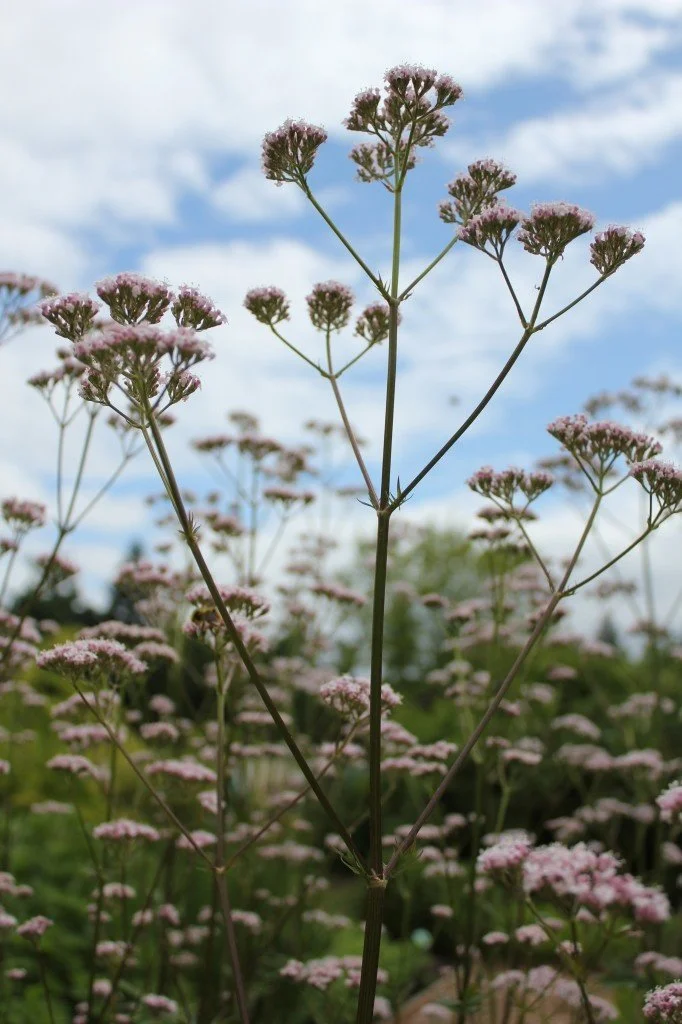
Valerian is a tall herbaceous perennial, 80–150 cm high, with hollow furrowed stems, pinnate leaves, and loose clusters of small fragrant white to pale pink flowers. The plant grows from a thick rhizome with many roots — the medicinal part, traditionally one of the most valued sleep and calming herbs in European herbalism.
Dried underground parts (rhizome, roots, and stolons), known as Valerianae radix. Roots are harvested in autumn, cleaned, and dried. Used as cut root for teas, as powder in tablets and capsules, or as liquid and dry extracts and tinctures. Fresh root is sometimes tinctured directly.
A traditional European "nervine" and mild sedative, valerian was used for:
Nervousness, anxiety, "nervous unrest," and irritability
Difficulty falling asleep and light insomnia
Tension headaches, muscle spasms, menstrual cramps, intestinal cramps, and nervous palpitations (as an antispasmodic)
Warming tonic, diuretic, fever support, and digestive remedy in older folk medicine
Sleep and anxiety: Widely used in modern herbal medicine and over-the-counter remedies to improve sleep quality, shorten sleep onset, and reduce mild anxiety and stress. Often combined with hops, lemon balm, or passionflower.
Nervous system and muscles: Used for conditions involving tension and over-stimulation — nervous restlessness, test anxiety, stress-related palpitations, and muscle tension in neck, back, and shoulders.
Research insights: Root extracts show sedative, anxiolytic, and muscle-relaxing effects, likely through valerenic acids and related compounds that influence GABA and other neurotransmitter systems.
May cause drowsiness — avoid combining with alcohol, sedatives, or other sleep medications without professional guidance. Rare paradoxical stimulation may occur in some individuals. Avoid during pregnancy and breastfeeding.
Available as dried root, tincture, and as a featured ingredient in our sleep and calming tea blends.
Family: Caprifoliaceae
Portuguese: Valeriana, valeriana-oficinal, erva-dos-gatos
Other names: Garden valerian, common valerian
Valerian is a tall herbaceous perennial, 80–150 cm high, with hollow furrowed stems, pinnate leaves, and loose clusters of small fragrant white to pale pink flowers. The plant grows from a thick rhizome with many roots — the medicinal part, traditionally one of the most valued sleep and calming herbs in European herbalism.
Dried underground parts (rhizome, roots, and stolons), known as Valerianae radix. Roots are harvested in autumn, cleaned, and dried. Used as cut root for teas, as powder in tablets and capsules, or as liquid and dry extracts and tinctures. Fresh root is sometimes tinctured directly.
A traditional European "nervine" and mild sedative, valerian was used for:
Nervousness, anxiety, "nervous unrest," and irritability
Difficulty falling asleep and light insomnia
Tension headaches, muscle spasms, menstrual cramps, intestinal cramps, and nervous palpitations (as an antispasmodic)
Warming tonic, diuretic, fever support, and digestive remedy in older folk medicine
Sleep and anxiety: Widely used in modern herbal medicine and over-the-counter remedies to improve sleep quality, shorten sleep onset, and reduce mild anxiety and stress. Often combined with hops, lemon balm, or passionflower.
Nervous system and muscles: Used for conditions involving tension and over-stimulation — nervous restlessness, test anxiety, stress-related palpitations, and muscle tension in neck, back, and shoulders.
Research insights: Root extracts show sedative, anxiolytic, and muscle-relaxing effects, likely through valerenic acids and related compounds that influence GABA and other neurotransmitter systems.
May cause drowsiness — avoid combining with alcohol, sedatives, or other sleep medications without professional guidance. Rare paradoxical stimulation may occur in some individuals. Avoid during pregnancy and breastfeeding.
Available as dried root, tincture, and as a featured ingredient in our sleep and calming tea blends.